

Can credit repair help you prepare for a mortgage in Florida? Yes, when you treat it as a readiness process, not a promise of a fast score boost. If credit concerns have you wondering whether a home purchase needs to wait, you’re not alone. A credit repair mortgage Florida plan starts with understanding what’s in your credit profile and how it may affect a lender’s review.
This guide explains how to review your credit details, organize information that may need attention, and avoid claims that sound too good to be true. It also shows how credit repair can fit into a broader mortgage-readiness conversation, including discussions about FHA, VA, and USDA loan options. Every borrower’s situation is different, but a clear plan can help you identify practical next steps and prepare useful questions for a lending team.
Key Takeaways
- Learn how credit reports and credit scores differ, and why both can matter when preparing for a mortgage.
- Use a practical review process to spot possible report errors, gather supporting records, and track credit habits.
- See how credit repair mortgage Florida planning can fit into a wider conversation about your finances and homebuying goals.
- Explore how FHA, VA, USDA, and Jumbo loan options may align with different borrower circumstances.
Credit Repair for a Florida Mortgage: What It Can, and Cannot, Do
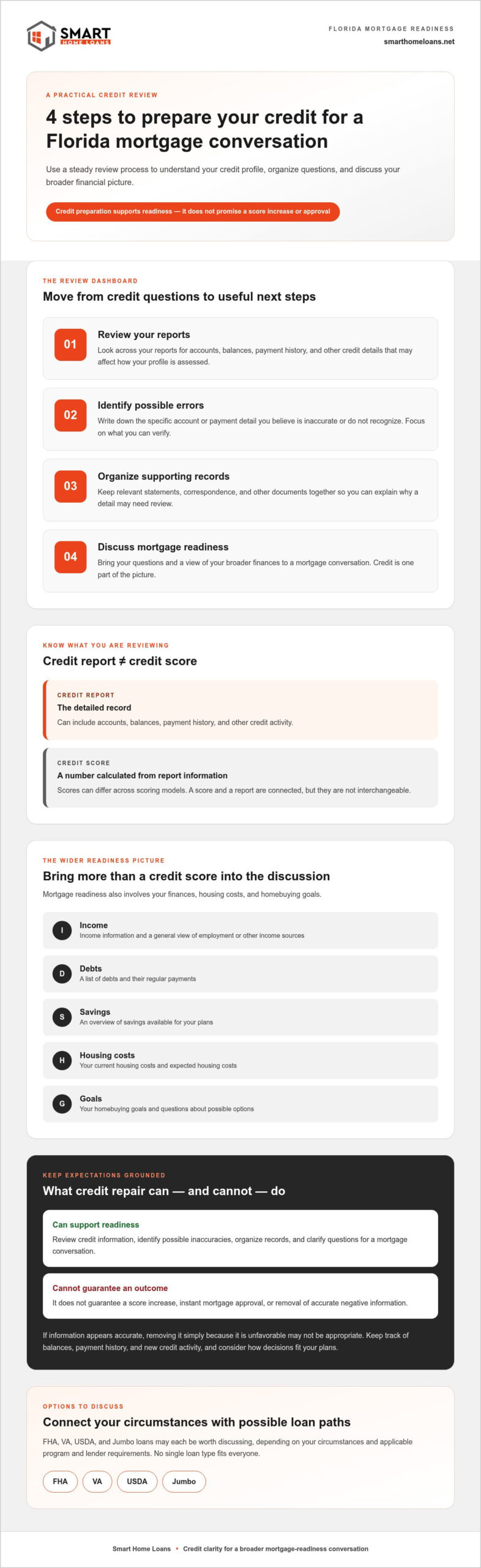
Mortgage-focused credit repair starts with reviewing the information in your credit reports and identifying possible inaccuracies or habits that may be holding your profile back. A report is the detailed record: it can show accounts, balances, payment history, and other credit activity. A credit score is a number calculated from report information using a scoring model. The two are connected, but they aren’t interchangeable, and scores can differ across models. For a plain-English overview, see Understanding Credit Scores.
Focus on what you can act on rather than trying to erase every negative mark. If a report contains information you believe is inaccurate, note the account and detail in question, then gather relevant statements or correspondence. If the information is accurate, removing it simply because it’s unfavorable may not be appropriate. Reviewing your credit alongside your broader finances helps you focus on realistic steps before a lender reviews your application.
Legitimate credit preparation means reviewing your credit information and addressing potential issues. It doesn’t guarantee a score increase, instant mortgage approval, or removal of accurate negative information.
Can credit repair make a Florida buyer mortgage-ready?
Credit repair can support mortgage readiness, but the outcome depends on your credit report, financial circumstances, and the lender’s review. A credit repair mortgage Florida plan should connect credit concerns to the larger mortgage conversation, not promise a particular result. For example, a possible reporting error calls for careful review, while a history of late payments may point to habits worth improving over time.
In Saint Augustine, Smart Home Loans provides credit repair support alongside mortgage options, helping borrowers consider credit as part of their homebuying picture. The process can help clarify your starting point and next steps, but it does not guarantee a score change or approval.
How to Prepare Your Credit for a Florida Mortgage
A steady review process can turn credit concerns into clear questions for your mortgage conversation. Review your reports, gather records, and consider your overall readiness before making major financing decisions. Keeping your notes and documents together makes it easier to explain what you’ve found and what you want to understand.
Review your credit information before making major financing decisions so you can act on what’s accurate, question what may be wrong, and discuss your options with a clearer picture.
- Review your reports. Look across the reports for accounts, balances, payment history, and other details that may affect how your credit profile is assessed.
- Identify possible errors. Note the specific information you believe is inaccurate, such as an account or payment detail you don’t recognize.
- Organize records. Keep relevant statements, correspondence, and other documents together so you can explain why a detail may need review.
- Discuss readiness. Bring your questions and a view of your broader finances to a mortgage conversation. Credit is one part of the picture.
As you prepare, keep track of balances, payment history, and new credit activity. This record can help you notice changes and explain your current situation. Avoid taking on new credit or changing financial habits based only on a promised score result. Consider how each decision fits your plans and ask how it may affect your mortgage readiness. For entrepreneurs and small business owners, seeking separate 0% interest business funding can help finance commercial needs without adding personal revolving debt before applying for a home loan.
Build a credit-review plan before applying
Compare the details across your reports and write down the account, the information in question, and why you believe it’s inaccurate. Keep supporting records organized. Dispute steps depend on the situation, so review current guidance from authoritative consumer resources such as the Consumer Financial Protection Bureau before submitting a dispute. For related mortgage context, explore FHA loan options for buyers with credit challenges.
A credit repair mortgage Florida plan works best when it supports a broader readiness discussion. Explore credit repair and mortgage-readiness support as you prepare to discuss your next steps.
Explore Mortgage Options and Credit Repair Support in Saint Augustine
A mortgage-readiness conversation should look beyond a credit score. Income, existing debts, savings, expected housing costs, and homebuying goals all help shape the discussion. For example, two buyers with similar credit profiles may have different priorities because their income, monthly obligations, or available savings differ. A credit repair mortgage Florida plan is most useful when you consider credit concerns alongside these other details.
Mortgage readiness involves your full financial picture, not just one score. FHA, VA, USDA, and Jumbo loans may each be worth discussing, depending on your circumstances and applicable program and lender requirements. The next step is to connect your goals and finances with options to explore, rather than assume one loan type fits everyone.
What to bring to a mortgage-readiness conversation
Before you meet with a lending team in Saint Augustine, gather a useful snapshot of your finances. You don’t need every answer ready. Start with:
- Income information and a general view of your employment or other income sources.
- A list of debts and their regular payments.
- Current housing costs and an overview of savings available for your plans.
- Your credit reports, notes about questions or possible errors, and any relevant records.
Having these details together can make it easier to talk through what’s working, what may need attention, and which questions to explore next. For a clearer picture of the steps ahead, review the Florida mortgage process from pre-approval to closing.
If you’re weighing credit repair alongside mortgage options, talk with Smart Home Loans about your goals and possible next steps. A conversation can help you see the path more clearly, without promising a particular score change or loan outcome.
Take the Next Step Toward Homeownership
Your next move doesn’t have to be a major commitment. Start by bringing your questions and current financial picture into a conversation about what may make sense for you. A thoughtful plan can help you focus on practical steps instead of chasing a quick score change or waiting for every uncertainty to disappear.
Smart Home Loans is managed by Sean, NMLS ID 1734077, and provides credit repair support alongside mortgage and down payment assistance services. If you’re considering credit repair mortgage Florida options, get guidance that connects your credit concerns with your homebuying goals.
Talk with Smart Home Loans about your mortgage-readiness next step. Move forward one informed decision at a time.
Frequently Asked Questions
How long does credit repair take before applying for a mortgage?
It depends on what needs attention and how quickly the relevant information can be reviewed. Simple cases may take 30 to 60 days, while complex issues, such as identity theft, can take more than a year. Those timeframes aren’t guarantees, and a change to your credit information doesn’t automatically mean you’re ready to apply. Discuss timing with a lending team before setting a purchase deadline.
Can I get a mortgage in Florida while working on my credit?
Possibly. A lender reviews your complete application, so progress on credit concerns doesn’t by itself determine whether you can move ahead. For a Saint Augustine purchase, ask how an open dispute or recent account change could affect the application and whether it makes sense to apply now or continue preparing first. The answer depends on your circumstances and the lender’s review.
Will checking my credit hurt my mortgage chances?
Checking your own credit report generally doesn’t lower your score because it’s typically a soft inquiry. A formal credit application may involve a hard inquiry, which can affect your score. Before authorizing a lender to check your credit, ask whether the inquiry will be hard or soft and what it’s for. Avoid unnecessary credit applications while preparing for a mortgage.
Should I pay a company to remove negative information from my credit report?
Be cautious of any company promising to remove accurate negative information or guarantee a score increase. A fee can’t make accurate reporting disappear. If you believe an item is wrong, gather supporting records and follow current dispute instructions from an authoritative consumer resource. Focus on understanding the issue and its relevance to your plans, rather than paying for a promised quick fix.