

What if pre-approval is only the starting line? In the Florida mortgage process, it is. Pre-approval can help you understand your budget, but it isn’t final loan approval. Your lender still needs to review your finances and the property before you can close. That can feel like a lot to manage, especially when inspection findings, an appraisal, or insurance questions come up along the way.
A clear plan can make each step easier to follow. This guide covers the usual checkpoints, from gathering documents and applying to underwriting and closing. You’ll learn what lenders review, what you may need to provide, and which Florida property questions to raise early with the appropriate professionals. Whether you’re buying in Saint Augustine or elsewhere in Florida, understanding what comes next can help you prepare and ask informed questions.
Key Takeaways
- Gather income, credit, and asset information before applying so you’re ready when the lender requests documents.
- Pre-qualification and pre-approval can help clarify your budget, but neither is a final loan commitment.
- Follow the Florida mortgage process checkpoint by checkpoint, and respond promptly when your lender requests information or conditions.
- Ask early about the property’s insurance availability, flood exposure, taxes, and any association requirements that could affect financing or closing.
Florida Mortgage: Preparation to Pre-Approval
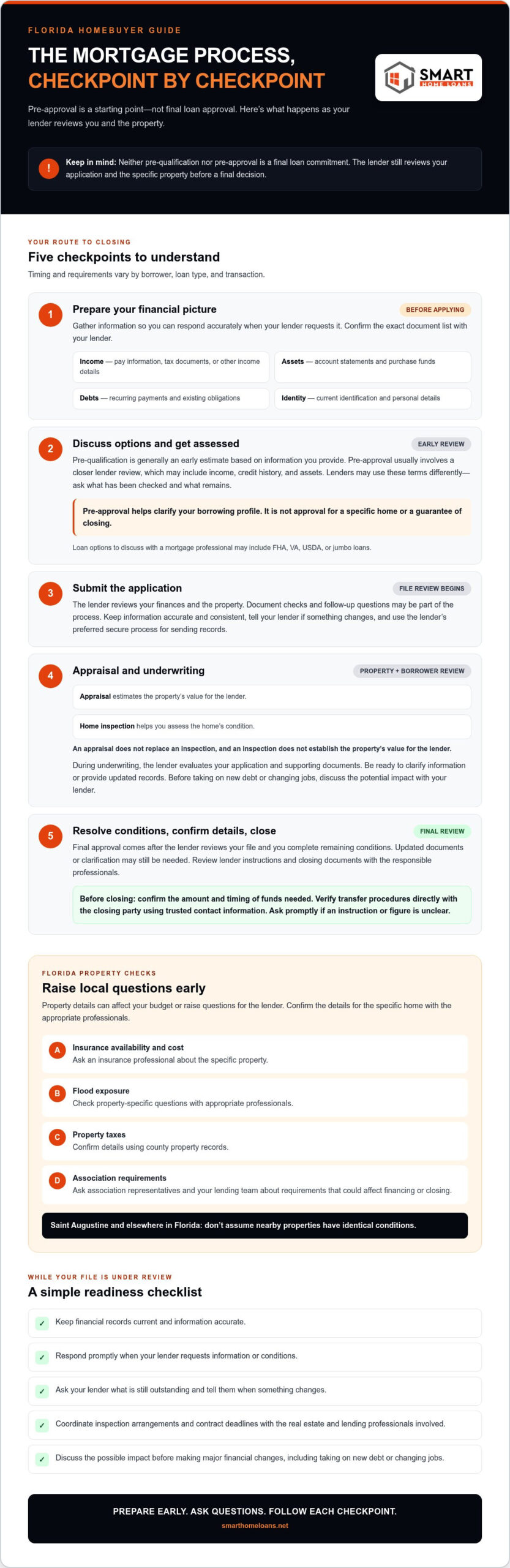
The Florida mortgage process has clear checkpoints, although timing and requirements vary by borrower, loan type, and transaction. Start by reviewing your finances, then discuss loan options, submit an application, and respond as the lender reviews your file. A mortgage professional can help you understand options such as FHA, VA, USDA, or jumbo loans. For a foundational overview of how a mortgage loan works, review the basic terms before you begin.
Pre-qualification is generally an early estimate based on financial information you provide. Pre-approval usually involves a closer lender review, which may include your income, credit history, and assets. Lenders may use these terms differently, so ask which checks have been completed and what remains.
Pre-approval is an early assessment of your borrowing profile, not final approval for a specific home or a commitment to lend. The lender still needs to review your application and the property, and may request more information before making a final decision.
What should you prepare before applying for a Florida mortgage?
Gather common document categories so you can respond accurately when requested. If you want to understand how to get pre-approved for a mortgage and which documents lenders commonly request, a practical checklist can help you organize key financial details before speaking with lenders. Your lender may ask for:
- Income: pay information, tax documents, or details about other income sources.
- Assets: account statements showing savings and funds available for the purchase.
- Debts: information about recurring payments and existing obligations.
- Identity: current identification and personal details needed for the application.
Confirm the exact document list with your lender because requests can vary. Keep information accurate and consistent, and tell the lender if something changes. Complete records help the lender assess your application, but they can’t guarantee a particular decision. Getting organized early makes the first steps easier and helps you know what to ask as the review moves forward.
Florida Mortgage Process: How Application, Appraisal, and Underwriting Fit Together
Once you submit an application, the lender begins reviewing your finances and the property. The Florida mortgage process may include document checks, an appraisal, and follow-up questions. The exact steps depend on your loan and application. Answer requests promptly and ask your lender what is still outstanding so you can help keep the file moving.
An appraisal estimates the property’s value for the lender. It differs from a home inspection, which helps you assess the home’s condition—working with a licensed team like Anchorpoint Inspection Services helps identify physical defects or safety issues before closing. An appraisal doesn’t replace an inspection, and an inspection doesn’t establish the property’s value for the lender.
During underwriting, the lender evaluates your application and supporting documents. Be ready to clarify information or provide updated records. Before making major financial changes, such as taking on new debt or changing jobs, discuss the potential impact with your lender.
What can Florida buyers do while the lender reviews the file?
Stay organized while the review is underway. Keep financial records current, and send requested documents through the lender’s preferred secure process. Coordinate inspection arrangements and contract deadlines with the real estate and lending professionals involved. For a broader checklist, the Consumer Financial Protection Bureau’s home buying process guide can help you track key steps.
Comparing FHA, VA, and USDA options? Review this Florida guide to FHA, VA, and USDA loans, then discuss which options may fit your circumstances with a mortgage professional. You can also learn about mortgage options and application guidance from Smart Home Loans.
Florida Mortgage Process: Final Approval, Local Checks, and Closing
Final approval comes after the lender reviews your file and you complete any remaining conditions. The lender may need updated documents or clarification before confirming the loan. Requirements and timing vary, so stay in touch with your lending professional and don’t treat pre-approval as a guarantee of closing. Understanding the differences between prequalification, pre-approval, and final approval can help you set realistic expectations at each stage of the process.
Check Florida property details early. Insurance availability and cost can affect your budget, while flood exposure, property taxes, and association requirements may raise questions for the lender or buyer. Confirm details for the specific home with the appropriate insurance professional, county property records, association representatives, and your lending team. In Saint Augustine, as elsewhere in Florida, don’t assume nearby properties have identical conditions.
What should buyers confirm before closing in Saint Augustine or elsewhere in Florida?
As closing approaches, review lender instructions and closing documents with the responsible professionals. Confirm the amount and timing of funds needed, and verify transfer procedures directly with the closing party using trusted contact information. Ask promptly if a figure or instruction is unclear.
- Confirm property insurance availability and ask about flood-related information.
- Review county property records and check any applicable association requirements.
- Complete outstanding lender conditions and read final closing documents carefully.
- Verify funds-transfer instructions with the responsible closing party.
If credit concerns are part of your situation, this FHA loan guide for buyers with credit challenges may be a useful starting point. If you’re buying in the Saint Augustine area and considering an FHA loan, reviewing the FHA loan limits in St. Johns County for 2026 can help you understand how the county ceiling affects your budget before you finalize your loan plan. The Florida mortgage process involves coordinated final checks, not just a signature. If you’re weighing loan options, you can discuss your circumstances and financing options with Smart Home Loans.
Take Your Next Step Toward Homeownership
The Florida mortgage process is easier to manage when you treat each stage as a checkpoint: prepare your finances, understand what pre-approval does and doesn’t mean, and stay responsive as the lender reviews your application. Before closing, confirm property-specific questions about insurance, flood exposure, taxes, and association requirements with the appropriate professionals. These checks can help you plan ahead, though they can’t guarantee a particular outcome or closing date.
Choosing a loan option is another important step. Smart Home Loans is a mortgage brokerage offering FHA, VA, USDA, and jumbo loan options. Credit repair and down payment assistance are also among its support services. To discuss your circumstances and possible options, connect with Smart Home Loans.
Frequently Asked Questions
How long does the Florida mortgage process take?
There’s no fixed timeline for the Florida mortgage process. The pace depends on your application, loan type, property review, and how quickly you provide requested information. Appraisal scheduling, insurance questions, or association documents may also affect progress. Ask your lender which milestones remain, and coordinate updates with the professionals managing your purchase contract.
What is the difference between mortgage pre-approval and final approval?
Pre-approval is an early assessment of your finances based on information and documents reviewed so far. Final approval comes after the lender evaluates the full application, property, and any outstanding conditions. Pre-approval can help you understand your borrowing range, but it isn’t a final commitment to lend. Ask your lender what still needs review.
Can a Florida home purchase fall through after mortgage pre-approval?
Yes. Pre-approval doesn’t guarantee final approval or ensure a purchase will close. A lender may identify concerns during underwriting, the property review may raise issues, or your financial circumstances may change. If a concern comes up, contact your lender promptly and speak with the real estate professional handling your contract about deadlines and available next steps.
What Florida property details should I check during the mortgage process?
Check insurance availability, flood-related information, property taxes, and any association requirements for the specific home. In Saint Augustine, as elsewhere in Florida, confirm details with the appropriate insurance professional, county property records, association representatives, and your lender. Ask early so you have time to understand how property-specific information may affect your budget or financing review.
Pingback: Reverse Mortgage Florida: Complete 2026 Senior Homeowner Guide
Pingback: Jumbo Mortgage Lender Florida: How to Compare Your Options in 2026
Pingback: Mortgage Calculator Saint Augustine FL: Estimate Your 2026 Home Payment
Pingback: Mortgage Pre-Approval in Saint Augustine: A Practical 2026 Guide
Pingback: FHA Loan Requirements in St. Augustine, FL: 2026 Buyer Checklist
Pingback: Veteran Home Loan in Florida: Your 2026 VA Loan Guide
Pingback: Jumbo Loan Saint Augustine FL: Your 2026 Buyer’s Guide
Pingback: Home Loan with a Low Credit Score in Florida: Your 2026 Guide
Pingback: USDA Eligible Areas in Florida: Check a Home’s Address Before You Buy
Pingback: Credit Repair for a Florida Mortgage: A Practical 2026 Guide
Pingback: Refinance Mortgage in Ponte Vedra, FL: How to Decide in 2026
Pingback: Easy Mortgage Application in Florida: A Clear 2026 Guide
Pingback: Florida FHA Loans: Plan Your 2026 Cash to Close
Pingback: Mortgage After Credit Problems in Florida: Your 2026 Guide