
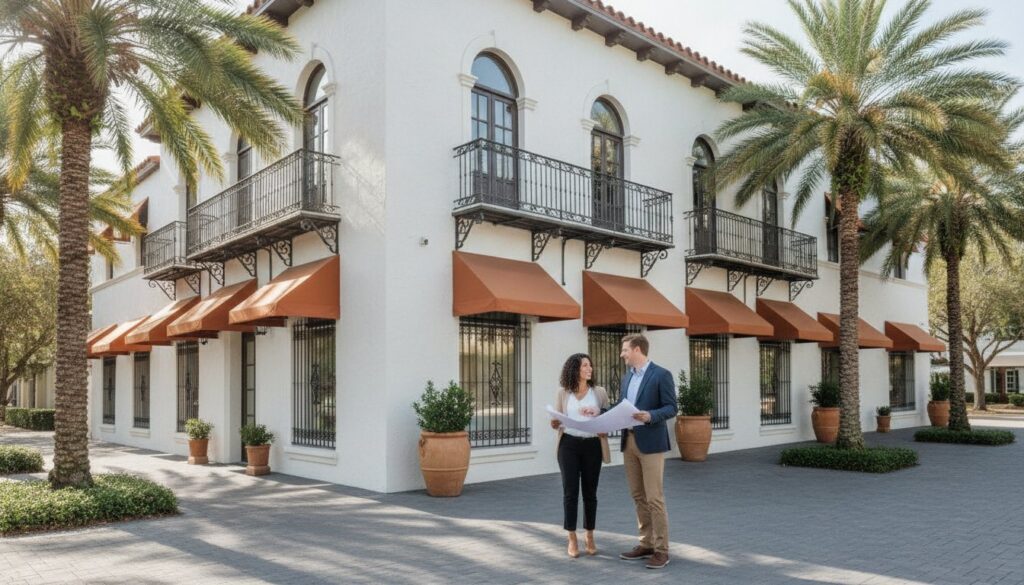
Why are you still paying your landlord’s mortgage when you could be building equity in your own Saint Augustine storefront? It’s frustrating to watch your hard-earned revenue disappear into a monthly rent check. You want the stability of owning your property, but the thought of a commercial mortgage loan often feels like a mountain of paperwork and confusing ratios. Most business owners worry about high down payments or waiting months for a big bank to say maybe. You deserve a clear path to ownership that doesn’t require a finance degree to understand. This guide provides a straightforward framework designed specifically for our local business community. We will break down how to master DSCR and LTV ratios, simplify the documentation process, and help you secure the best terms for your 2026 property purchase.
Key Takeaways
- Understand how a commercial mortgage loan functions as a debt-based tool secured by your property to fuel business growth.
- Compare fixed-rate and variable-rate options to find the best fit for your long-term financial stability in Saint Augustine.
- Learn how to manage common features like balloon payments to ensure your investment remains profitable and manageable.
- Discover why working with a local Saint Augustine brokerage streamlines the application process and provides access to diverse lending products.
Understanding Commercial Mortgage Loan Types for Florida Businesses
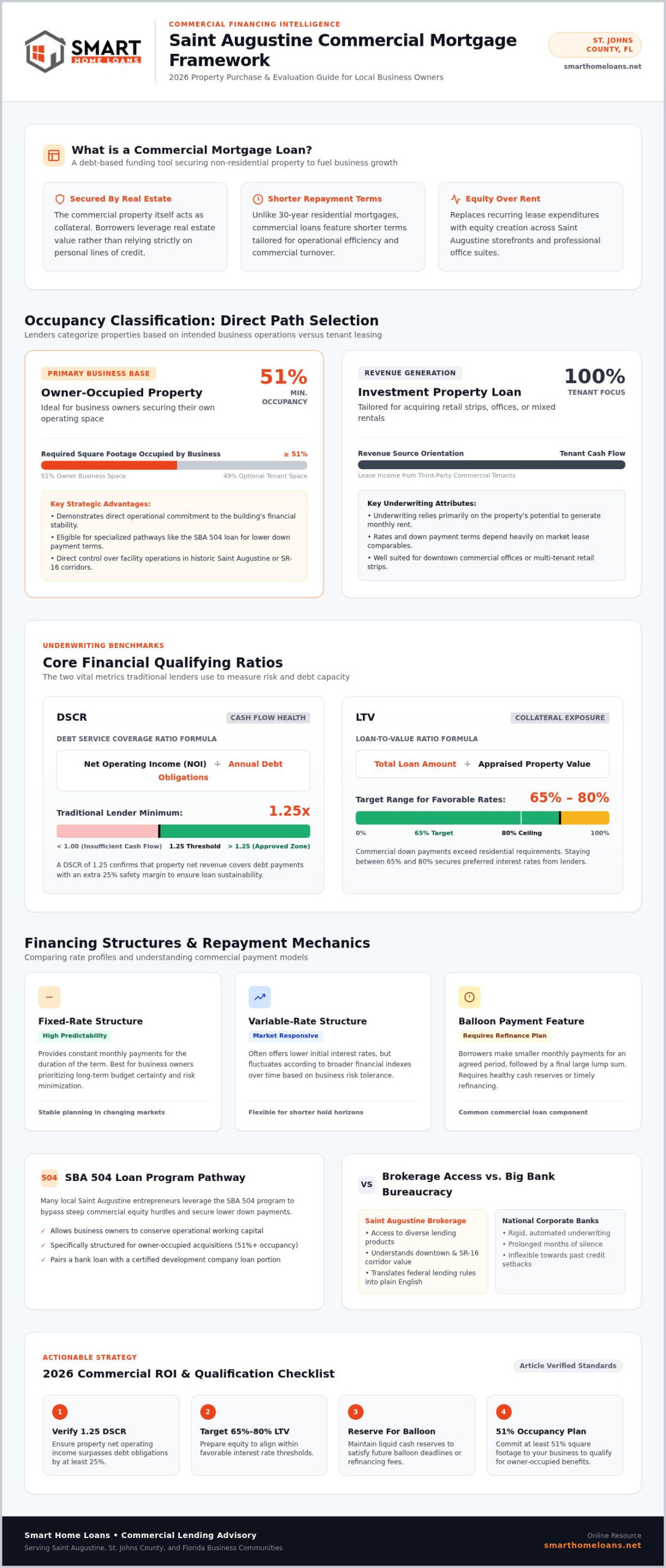
A commercial mortgage loan is a powerful debt-based funding tool used to acquire non-residential property. It functions as the primary financial bridge for local entrepreneurs who want to secure a permanent home for their operations. Unlike a home loan, this financing is secured by the commercial property itself as collateral. You aren’t just borrowing money; you’re leveraging the value of the real estate to grow your business. It’s helpful to remember that these loans usually have shorter repayment terms and different interest rate structures than residential mortgages. They are built for business efficiency rather than thirty-year residential timelines.
Owner-Occupied vs. Investment Property Loans
Before you apply, you must decide how the property serves your goals. Are you looking for a home for your business or a source of passive income? Lenders categorize these differently. This distinction impacts your interest rates and down payment requirements. Smart Home Loans helps you identify which path fits your 2026 growth strategy without the typical big bank confusion.
Owner-Occupied property typically requires the business to occupy at least 51% of the total square footage. This option is ideal for Saint Augustine business owners who want to own their space instead of renting. By occupying the majority of the building, you demonstrate a direct commitment to the property’s success. Investment property loans, by contrast, focus on those seeking rental income from tenants. These loans rely heavily on the property’s potential to generate monthly revenue. Whether you are buying a historic office in downtown Saint Augustine or a new retail strip in St. Johns County, knowing your occupancy status is the first step toward a successful application.
Evaluating Terms, Rates, and ROI for Your Commercial Property
Choosing between a fixed-rate and variable-rate commercial mortgage loan depends on your risk tolerance. Fixed rates offer predictability for long-term planning, while variable rates might start lower but shift with the market. Many commercial loans also include balloon payments. This means you pay smaller monthly amounts for a set period, then a large lump sum at the end. It’s a common feature that requires a solid refinancing plan. Your personal financial history matters too. If you’re currently improving credit for home loans, those same healthy habits will help you qualify for better terms. These structures are quite different from jumbo loans in Florida, which focus on luxury residential limits rather than business revenue.
Key Qualifying Factors: DSCR and LTV Decoded
Debt Service Coverage Ratio (DSCR) is the primary measure of your cash flow health. It compares your net operating income to your debt obligations. Lenders use this to ensure the property generates enough profit to pay the loan comfortably. Loan-to-Value (LTV) is the other side of the coin. It represents the ratio of the loan amount to the property’s appraised value. Because a commercial mortgage loan carries different risks, down payments are typically higher than residential ones. Many local owners utilize the SBA 504 loan program to access lower down payment options. To plan your ROI, use this quick checklist:
- Verify your DSCR is at least 1.25 for most traditional lenders.
- Aim for an LTV between 65% and 80% to secure favorable rates.
- Ensure your cash reserves can handle a future balloon payment or refinance costs.
Our team can help you analyze these metrics to find the best fit for your business.
Securing Your Commercial Real Estate Financing in Saint Augustine
Securing a commercial mortgage loan in St. Johns County shouldn’t feel like an interrogation at a distant corporate office. Local business owners often face rigid underwriting standards that don’t account for the unique growth of our historic district or the suburban corridors. We adhere to the commercial real estate lending guidance provided by federal regulators, but we translate those rules into plain English. This means we understand why a storefront in downtown Saint Augustine or a professional suite near State Road 16 is a vital investment. Our team acts as a supportive bridge, guiding you through every document and deadline until you have the keys in hand. We prioritize your time and your goals above all else.
The Smart Home Loans Advantage: Local Expertise Meets Speed
Bureaucratic hurdles often stall the approval process at national banks. If you’ve struggled with complex documentation or previous credit setbacks, you know how frustrating the silence can be. We specialize in navigating these obstacles on your behalf. Our brokerage model gives you access to a wide variety of lending products that big banks simply can’t offer. We work quickly to match your specific needs with a lender that values your business’s potential. Don’t let another year of renting pass you by while the 2026 Saint Augustine market continues to grow. Secure your business’s legacy today. Smart Home Loans simplifies the commercial process by matching Saint Augustine businesses with tailored lending solutions.
Claim Your Piece of Saint Augustine’s Future
Your business deserves a permanent home in the heart of St. Johns County. We’ve explored how a commercial mortgage loan acts as a bridge from renting to ownership, giving you the equity you’ve earned. You now know how to decode DSCR ratios and choose between fixed or variable rates to maximize your property’s ROI. Don’t let complex paperwork or big bank delays hold you back from growing in 2026. Smart Home Loans is here to simplify every step. We combine deep local Saint Augustine expertise with access to specialized commercial lending products you won’t find at a standard branch. If your credit needs a boost first, our supportive credit repair services are ready to help you qualify for the best possible terms. Secure your Saint Augustine commercial financing today with Smart Home Loans. Take the first step toward owning your business space and building a lasting legacy in our community. You’ve got this.
Frequently Asked Questions
How much down payment is required for a commercial mortgage loan in Florida?
Most traditional lenders require a down payment between 20% and 35% for a commercial mortgage loan. This requirement ensures you have significant equity in the property from day one. However, some government-backed programs allow for as little as 10% down for owner-occupied spaces in Saint Augustine. We help you explore these options to keep more cash available for your daily operations.
What is the typical interest rate for a commercial property loan in 2026?
Interest rates for commercial properties are typically higher than residential ones and depend on the property type and your financial health. Because rates fluctuate based on market conditions, it’s best to check current 2026 indices like the Prime Rate or Treasury yields. We provide up-to-date quotes tailored to your specific Saint Augustine property to ensure you get the most competitive terms available today.
Can I get a commercial mortgage with a lower credit score?
Yes, you can still secure financing even if your credit isn’t perfect. While a higher score often leads to better interest rates, our specialized credit repair services help improve your eligibility before you apply. We focus on the overall strength of your business revenue and the property’s potential. This proactive approach ensures you aren’t stuck waiting while other local businesses expand.
How long does the approval process take for a commercial real estate loan?
The approval process for a commercial real estate loan usually takes between 45 and 90 days. This timeline accounts for property appraisals, environmental reports, and detailed financial underwriting. We strive to streamline this journey by managing the documentation and communicating directly with lenders. Our local Saint Augustine expertise helps avoid the common bureaucratic delays that often slow down larger, national institutions.