
What if a past credit setback changes your route to a Florida home, but doesn’t automatically close the door? If you’re searching “mortgage after credit problems Florida,” it’s understandable to want clear answers. Bankruptcy, foreclosure, late payments, and collections can affect a mortgage review, while online score rules and waiting periods can seem to conflict.
Before applying, get a clear picture of your credit history and finances. The type and timing of the credit event, whether it’s resolved, and your current financial picture all matter when exploring loan options. This guide explains what may influence eligibility, why an app-based credit score may differ from a lender’s review, and which records to organize before discussing your options. You’ll also find practical steps for assessing mortgage readiness, including how loan options, credit repair, and down payment assistance can fit into a plan. Whether you’re preparing to buy in Saint Augustine or elsewhere in Florida, a personalized review can help you identify a sensible next step.
Key Takeaways
- A mortgage after credit problems Florida borrowers pursue depends on more than one score. Lenders consider the broader financial picture and the applicable program requirements.
- Review your credit reports, dispute inaccurate information through appropriate channels, and keep supporting records together.
- Compare FHA, VA, and USDA options to understand which programs may fit your circumstances.
- Organize your finances before exploring next steps, including a mortgage review, credit repair, or down payment assistance.
Can You Get a Mortgage After Credit Problems in Florida?
Yes, past credit problems don’t automatically rule out a mortgage. A mortgage after credit problems Florida borrowers pursue depends on more than a single credit score. Lenders may also review income, existing debts, available funds, recent payment patterns, and the circumstances behind the credit event. A steady financial picture and a clear record of payments since the setback can help show where you stand, though they don’t guarantee approval.
Keep two timelines separate. A negative item’s credit-reporting period describes how long it may appear on a report. A loan program’s waiting period sets a different eligibility rule after certain events. One timeline does not tell you the other. Avoid relying on a general online estimate: requirements can change and vary by program, lender, and borrower details. This overview of Understanding Mortgage Loans can clarify how a mortgage works, but it won’t determine your eligibility.
How bankruptcy, foreclosure, late payments, and collections differ
The event’s type, date, and resolution all matter. A bankruptcy review may consider its chapter, discharge or dismissal status, and payment history since the case. A foreclosure can have program-specific requirements tied to its completion date. For late payments, the timing and your payment record since the missed payments may be relevant. A resolved collection may be viewed differently from one that remains unpaid, depending on program rules and the overall file.
For example, an older credit setback followed by consistent on-time payments gives a different picture from recent missed payments. There’s no universal timeline that fits every situation. Buying in Florida doesn’t replace the applicable loan-program guidelines or lender requirements. Before applying, gather the documents that show when the event occurred, how it was resolved, and how you’ve managed credit since.
How to Prepare for a Florida Mortgage After Credit Problems
A clear preparation process can make a mortgage discussion more useful and help you avoid applying before you understand your file. Work through these steps:
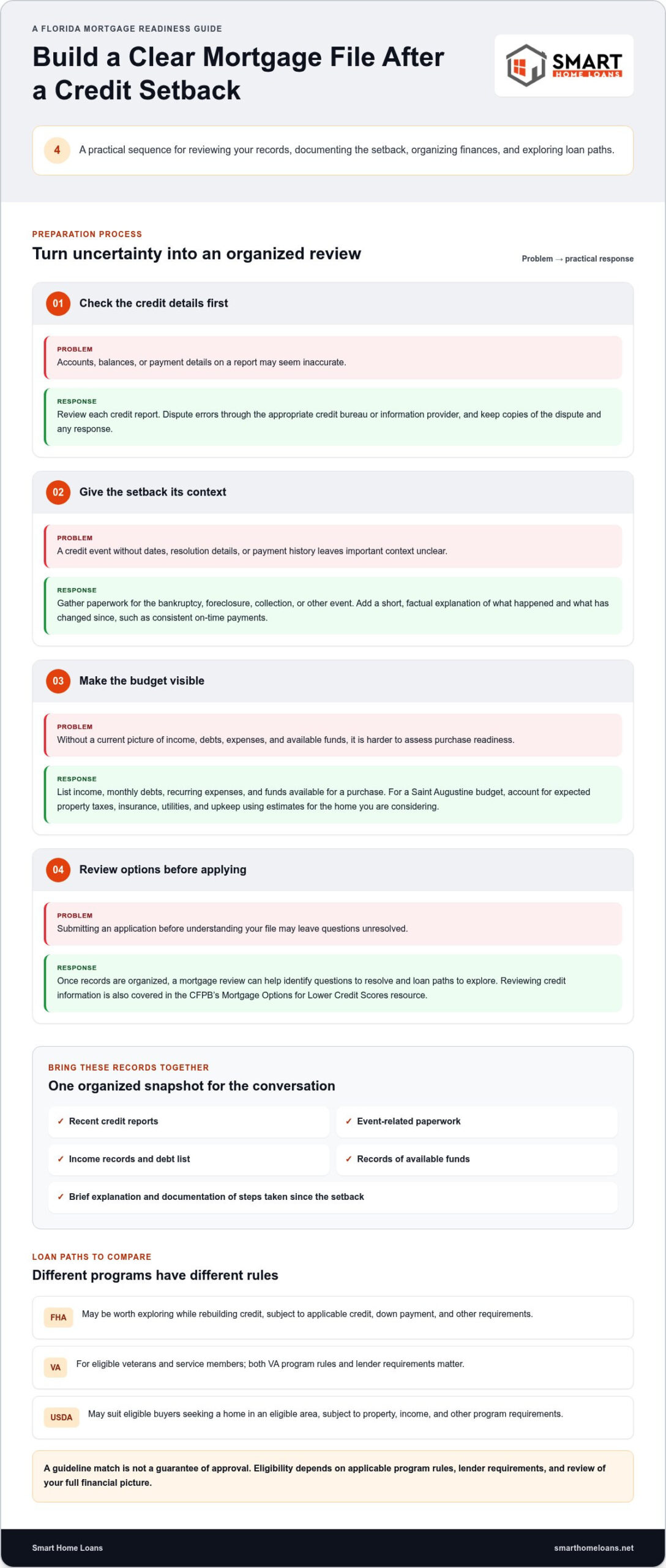
- Review your credit reports. Check each report for accounts, balances, or payment details that seem inaccurate. If you find an error, dispute it through the appropriate credit bureau or information provider. Keep copies of your dispute and any response.
- Document the setback. Gather paperwork connected to a bankruptcy, foreclosure, collection, or other event. Write a short, factual explanation of what happened and what has changed since, such as a consistent record of on-time payments.
- Organize your finances. Make a current list of income, monthly debts, recurring expenses, and funds available for a purchase. For a Saint Augustine homebuying budget, account for expected housing costs such as property taxes, insurance, utilities, and upkeep. Use estimates for the home you’re considering rather than relying on a general online figure.
- Review options before submitting an application. Once your records are in order, a mortgage review can help identify questions to resolve and loan paths to explore. The CFPB’s Mortgage Options for Lower Credit Scores resource also explains why reviewing credit information matters.
What to gather before discussing mortgage options
Keep recent credit reports, event-related paperwork, income records, a list of debts, and records showing available funds together. Add your brief explanation and documentation of steps taken since the setback. This organized snapshot makes a conversation about a mortgage after credit problems Florida borrowers are considering more focused. Smart Home Loans can review your circumstances and discuss mortgage options, credit repair, and down payment assistance. Explore mortgage support for your situation.
Mortgage Options and Next Steps After a Credit Setback
A credit setback doesn’t point every borrower toward the same loan. FHA, VA, and USDA programs have different rules, and lenders may apply additional requirements. The right path depends on your full financial picture and the program’s current guidelines.
- FHA: May be worth exploring if you’re rebuilding credit and can meet applicable credit, down payment, and other requirements. Read this FHA loan with bad credit in Florida guide for more detail.
- VA: Available to eligible veterans and service members. Both VA program rules and lender requirements matter.
- USDA: May suit eligible buyers seeking a home in an eligible area, subject to program requirements such as property and income rules.
Meeting one guideline doesn’t guarantee approval. Credit history is one part of the review, alongside other financial and loan details.
Turn your credit history into a clear mortgage plan
A mortgage review can connect your credit history, current finances, and loan options. Smart Home Loans helps borrowers explore mortgage options, credit repair, and down payment assistance. These services can help you understand possible next steps, but they don’t guarantee qualification, approval, or a particular credit outcome.
Want to understand what the application journey involves? The Florida mortgage process guide outlines the broader steps. Bring your questions and financial details to Smart Home Loans, serving Saint Augustine. Together, you can discuss which options may be worth exploring. Eligibility and final approval depend on the applicable program rules and review of your circumstances.
Take a Clear Next Step Toward Homeownership
You don’t have to choose between applying today and giving up on homeownership. A readiness conversation can clarify what needs attention, which documents or milestones may matter, and when it could make sense to revisit loan options. That directs your effort toward a plan instead of guesswork. If you’re considering a mortgage after credit problems Florida, timing and preparation deserve a personal look, not a one-size-fits-all answer.
Smart Home Loans is a mortgage brokerage managed by Sean, NMLS ID 1734077. The company provides mortgage options, credit repair, and down payment assistance to support borrowers with different circumstances. Eligibility and approval aren’t guaranteed, but a clear discussion can help you understand possible next steps.
Talk through your Florida mortgage options with Smart Home Loans. Your past credit challenges are part of your story, not the only thing that can shape what comes next.
Frequently Asked Questions
Will checking my own credit score hurt my chances of getting a mortgage?
Generally, no. Checking your own score is usually a soft inquiry and doesn’t lower it. A lender’s credit check is typically a hard inquiry and may affect your score. Review your reports before applying, and check current guidance from the credit bureaus about how inquiries are handled. One lender inquiry alone doesn’t decide whether you qualify for a mortgage.
Can I get a mortgage in Florida after a foreclosure?
A past foreclosure doesn’t automatically rule out a future mortgage. If you searched “mortgage after credit problems Florida,” remember there’s no single waiting timeline for every borrower. The applicable loan program, your circumstances, and your financial history since the foreclosure can all matter. Credit-reporting duration is separate from program requirements, so discuss current guidelines with Smart Home Loans before deciding when to apply.
Does a bankruptcy stay on my credit report for the same amount of time as a mortgage waiting period?
No. Credit-reporting periods and mortgage-program waiting periods are separate rules. The time a bankruptcy appears on a report doesn’t by itself determine when you may qualify. The bankruptcy chapter, whether it was discharged or dismissed, the loan type, and current program guidelines may affect the review. Review current requirements for your circumstances before setting an application date.
Can I apply for a mortgage if I still have collections on my credit report?
Possibly. Collections don’t lead to the same outcome for every borrower or loan program. Their type, balance, age, accuracy, and applicable guidelines may affect underwriting. Review the account details and dispute inaccurate information through the appropriate channels. Before paying or settling a collection, understand how that step could affect your circumstances and mortgage review.