

Refinancing your home in Saint Augustine may cost more than the interest rate alone suggests. Typical mortgage closing costs range from 1.5% to 2.5% of the loan principal, so refinancing your home in Saint Augustine starts with looking at the full cost, not just the monthly payment. The right option depends on your loan, home value, and goals.
It’s reasonable to want clear numbers before deciding. This guide covers the costs to plan for, how to compare lenders and Loan Estimates, and what to expect from application through closing. You’ll also learn how a new rate and loan term can affect your payment, helping you weigh potential savings against upfront costs.
Key Takeaways
- Plan for closing costs of 1.5% to 2.5% of the loan principal, then compare that upfront expense with potential payment savings.
- Request Loan Estimates from at least three lenders and compare the rate, fees, loan term, and projected monthly payment side by side.
- Prepare for an application review, possible appraisal, and closing; your finances, home value, and loan details shape the process.
- If FHA financing fits your needs, Smart Home Loans offers FHA Home Loans, as well as VA, USDA, and Jumbo Loans.
Refinance payment and interest calculator
Before choosing a refinance, compare the monthly payment, total interest, and upfront costs. A calculator can provide a useful estimate, but the loan purpose and property costs also shape the result.
Payment and Cash-Out Estimates
Rate-and-term refinancing replaces your mortgage to change its rate, term, or both. Cash-out refinancing increases the new mortgage and gives you some of your equity as cash. A streamline refinance simplifies certain existing government-backed loans, with eligibility based on the loan program. Enter your current balance, proposed rate, term, and closing costs in a refinance payment calculator. For cash-out refinancing, include the amount you want to receive.
Equity and Current Rates
There is no single equity amount that applies to every Florida refinance. Lenders assess your home’s value, mortgage balance, loan-to-value ratio, credit, and refinance type. The illustrative Freddie Mac 30-year average mortgage-rate benchmark was 7.28% on October 1, 2026. That is a benchmark, not a personal St. Augustine offer; your rate estimate depends on your loan profile and terms. Homeowners insurance, flood-zone considerations, and property taxes also affect the total monthly housing estimate and escrow calculation.
Savings and Break-Even Estimates
To estimate savings, compare your current principal-and-interest payment with the proposed payment, then account for closing costs and any changes in taxes or insurance. Divide the refinance costs by the monthly payment reduction to estimate how long it will take to break even. If that takes longer than you expect to keep the mortgage, the savings case weakens. A lower payment can still mean more interest overall if you extend the term. Cash-out refinancing also increases the balance and may increase total interest.
Choosing a trustworthy lender
For a Saint Augustine refinance, compare written Loan Estimates from at least three lenders. Each estimate outlines projected costs and loan terms, making differences easier to spot than rate advertisements alone. Keep the loan amount, term, and refinance purpose consistent so you’re comparing similar financing.
Look beyond the interest rate. Check the estimated monthly payment, closing costs, lender charges, and whether points are included. Points are upfront charges that can affect the rate and total cost. Also compare whether each estimate assumes cash-out or rate-and-term refinancing, since each serves a different purpose.
- Confirm the proposed loan amount and term match your goal.
- Compare the rate, payment estimate, and total costs in each Loan Estimate.
- Note whether the estimate includes cash-out, points, or other loan features.
Consider how clearly each lender explains the figures. A clear breakdown shows which costs are paid upfront and which are included in the new mortgage. If one estimate appears lower, identify the fees or terms behind the difference before deciding. Even if you qualify, assess the complete offer, not just the headline rate.
Use your current mortgage statement and the same home-value estimate when discussing financing with lenders. That helps keep comparisons consistent and clarifies how your balance and equity affect the proposal. To explore available financing program options, review the choices relevant to your goals.
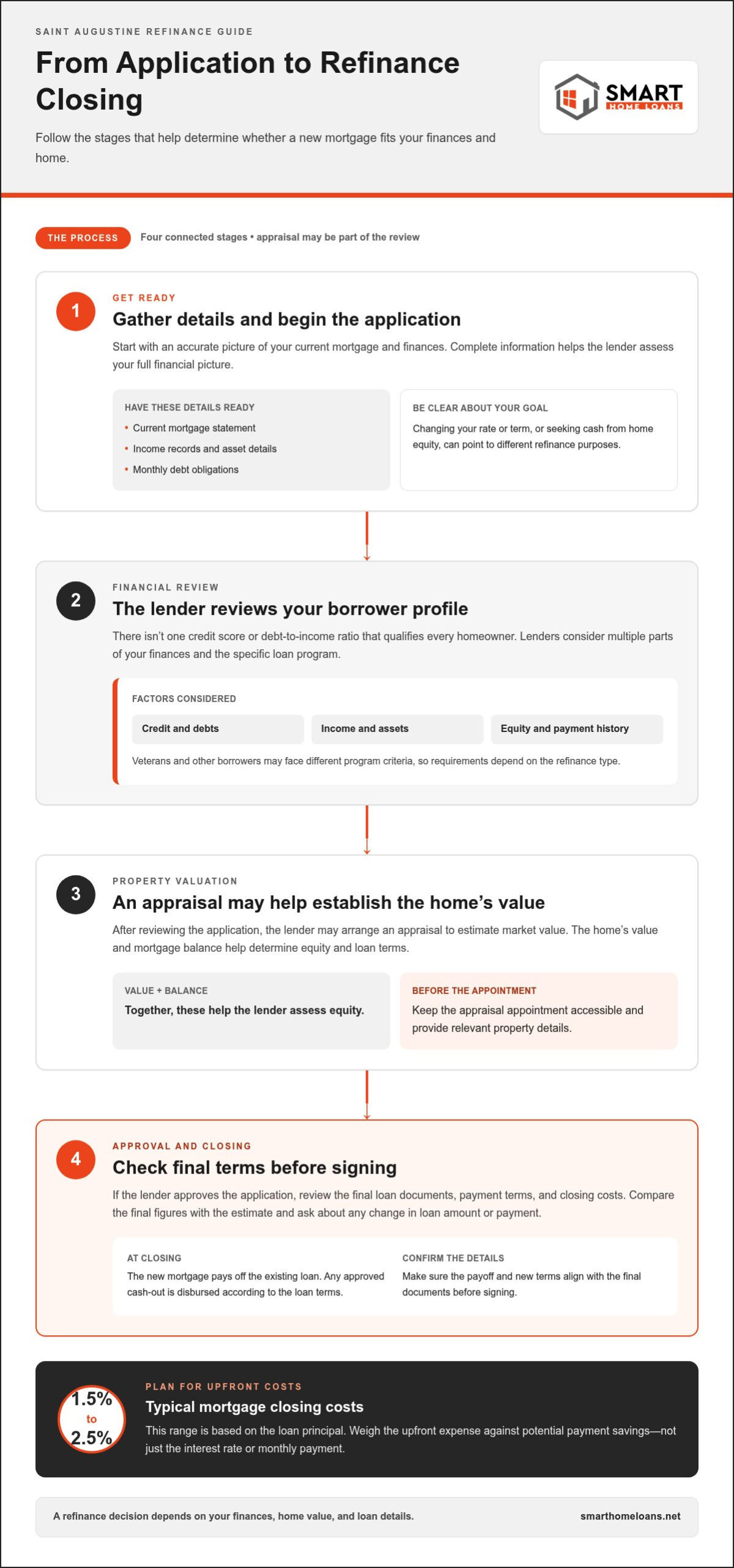
Refinance application, appraisal, and closing process
A refinance moves through application, financial review, property valuation, and closing. Each stage helps determine whether the new mortgage fits your finances and home.
Application and Borrower Qualifications
There isn’t one credit score or debt-to-income ratio that qualifies every homeowner. Lenders consider both, along with income, existing debts, equity, payment history, and the loan program. Veterans and other borrowers may face different program criteria, so compare the requirements for the specific refinance type. Start your application with your current mortgage statement, income records, asset details, and monthly debt obligations. Accurate information helps underwriting assess your full financial picture.
Appraisal and Closing Stages
After reviewing your application, the lender may arrange an appraisal to estimate the home’s market value. That value, together with your mortgage balance, helps determine equity and loan terms. Keep the appraisal appointment accessible and provide relevant property details. If the lender approves the application, review the final loan documents, payment terms, and closing costs before signing. Typical mortgage closing costs range from 1.5% to 2.5% of the loan principal. At closing, the new mortgage pays off the existing loan, and any approved cash-out is disbursed according to the loan terms.
Before signing, compare the final figures with the estimate and ask about any change in loan amount or payment. Unlike buyers purchasing a home, refinancing homeowners focus on replacing an existing mortgage, so confirm how the payoff and new terms align. Explore your refinancing next steps and prepare your application documents.
Smart Home Loans: FHA Home Loans
Smart Home Loans offers FHA Home Loans and other financing options to consider when reviewing your goals. Start by deciding what you want to achieve: change your loan terms, explore available programs, or find a loan type that fits your circumstances. FHA, VA, USDA, and Jumbo Loans are among the options. Each suits different borrower needs, so compare eligibility and loan terms with your plans for the home.
Bring your current mortgage details and questions about payments, equity, and the application process. A focused conversation can help you understand which financing option may suit your situation and what information to prepare next.
Contact Smart Home Loans to discuss your options, or visit smarthomeloans.net.
Choose Your Next Step With Confidence
Before deciding, identify what you want your next mortgage to do. A clearer monthly budget, a different loan structure, or access to home equity may each point to a different path. If refinancing my home in Saint Augustine is your next step, focus the conversation on the goal that matters most to your household.
Smart Home Loans offers FHA Home Loans, VA Loans, and USDA Loans. These options can help frame a conversation about your financing needs and possible next steps. The right fit depends on your circumstances, so bring your questions and current mortgage details to the discussion.
Take the next step at your pace. Contact Smart Home Loans to discuss refinancing and explore which direction may fit your plans. A thoughtful comparison can help you move forward with greater clarity and confidence.
Frequently Asked Questions
How much does it cost to refinance in Saint Augustine?
Refinancing costs typically range from 1.5% to 2.5% of the new loan principal. Your estimate depends on the loan amount and which charges apply, such as lender fees, title services, appraisal, and prepaid items. For a useful budget, distinguish charges paid at closing from amounts added to the new mortgage, then assess the total against your expected savings.
How soon can I refinance after buying my home?
Timing depends on the refinance program and its payment-history requirements. For an FHA Streamline refinance, borrowers must make six months of payments. This is a payment seasoning requirement, not a universal rule for every refinance or a statement that all homeowners can apply immediately after purchase. Your current loan type and refinance goal shape which timing conditions apply.
What are the typical refinance closing costs in St. Augustine, FL?
Typical refinance closing costs range from 1.5% to 2.5% of the loan principal. The final total can differ from another homeowner’s because the loan amount, lender charges, title work, appraisal, and prepaid expenses vary. Review the itemized estimate, not only its total, and note whether any costs are paid upfront or included in the new mortgage balance.
What documents and steps are required to refinance a mortgage in Florida?
Most applications begin with identity, income, asset, debt, and current mortgage information. Gather recent pay records or income statements, bank statements, your mortgage statement, and details of outstanding debts. The lender reviews the application, assesses the property value when needed, and prepares closing documents. Self-employed homeowners may also need business income records to explain how their earnings are documented.
What Florida taxes, recording fees, and other local charges apply to a mortgage refinance?
Local charges depend on the new loan documents and transaction details. The closing estimate should itemize applicable recording charges, lender and title services, prepaid interest, and escrow funding rather than combine them into one unexplained figure. In Saint Augustine, compare the itemized charges with the final closing disclosure to identify government charges, service fees, and prepaid housing expenses.