

For reverse mortgage eligibility in St. Augustine, the minimum age depends on the loan type. Homeowners must be 62 or older for a Home Equity Conversion Mortgage (HECM), the most common reverse mortgage. Some other reverse mortgage products may be available starting at age 55, with eligibility varying by product.
It’s understandable to wonder whether age alone determines reverse mortgage eligibility in St. Augustine. It doesn’t. Your home, mortgage balance, and plans to live in the property as your primary residence also matter.
This guide explains the main eligibility considerations, what property and financial responsibilities come with a reverse mortgage, and how to find a St. Augustine specialist. You’ll get a clearer picture of whether it may fit your situation and what to understand before moving forward.
Key Takeaways
- Compare your home’s value with any mortgage balance to understand how equity and loan factors affect the funds available.
- Review property eligibility, including rules for condos, manufactured homes, and two-to-four-unit properties.
- Include property taxes, insurance, maintenance, and repairs in your planning; eligibility involves ongoing responsibilities, not age alone.
- A St. Augustine reverse mortgage specialist can help you understand the requirements and how they relate to your home and circumstances.
Can anyone take out a reverse mortgage loan?
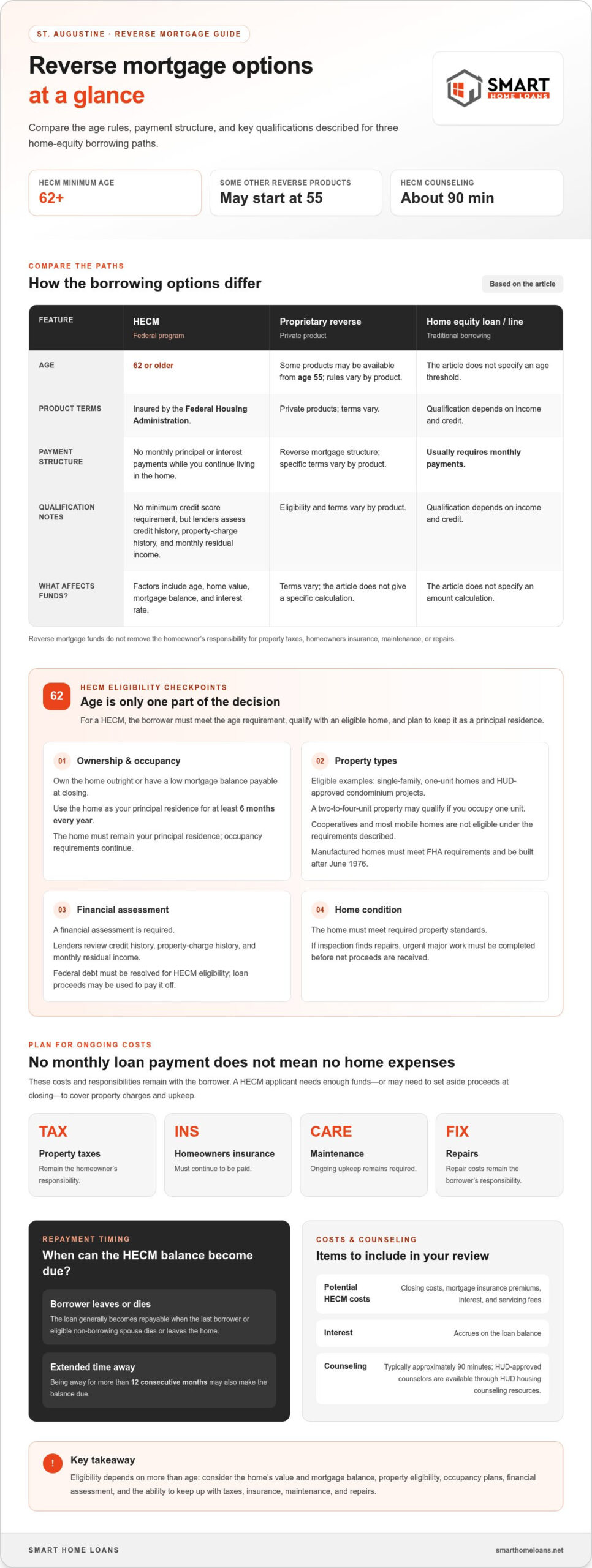
No. For a Home Equity Conversion Mortgage (HECM), homeowners must be at least 62, own the home outright or have a low balance payable at closing, and use it as their principal residence for at least six months every year. Some other reverse mortgage products may start at age 55, but eligibility varies. A HECM has no minimum credit score requirement, yet lenders assess credit history, property-charge history, and monthly residual income.
A reverse mortgage lets you access home equity without monthly principal or interest payments while you continue living in the home. The funds may help preserve savings or improve cash flow, but property taxes, homeowners insurance, upkeep, and repairs remain your responsibility. The available amount depends on factors including your age, home value, mortgage balance, and interest rate. For HECM eligibility, federal debt must be resolved, though loan proceeds may be used to pay it off.
How does a HECM compare with a proprietary reverse mortgage or a home equity loan? A HECM is insured by the Federal Housing Administration. Proprietary reverse mortgages are private products with terms that vary. A home equity loan or line of credit usually requires monthly payments, and qualification depends on income and credit.
What happens when you move, sell, or die? The loan generally becomes repayable when the last borrower or eligible non-borrowing spouse dies or leaves the home. Being away for more than 12 consecutive months may also make the balance due.
Using home equity for renovations may help adapt your home for aging in place and reduce the savings you need for improvements. Buying a home is different: a purchase-specific reverse mortgage program may apply instead of a standard equity payout. Before choosing either option, consider how the housing change affects occupancy and ongoing responsibilities.
What is the minimum age requirement for a reverse mortgage?
For a Home Equity Conversion Mortgage (HECM), the minimum age is 62. Other reverse mortgage products may be available starting at age 55, with eligibility varying by product. Property rules matter too. Eligible homes include single-family, one-unit dwellings and HUD-approved condominium projects. A two-to-four-unit property may qualify if the borrower occupies one unit. Cooperatives and most mobile homes aren’t eligible under the requirements described here.
Manufactured homes must meet FHA requirements and have been built after June 1976. The home must also meet required property standards. If an inspection identifies repairs, urgent major work must be completed before the homeowner receives net proceeds. HECM borrowers must also complete a financial assessment and show they can meet ongoing property obligations.
Property taxes, homeowners insurance, maintenance, and repairs remain the borrower’s responsibility. A HECM applicant needs enough funds, or must set aside some proceeds at closing, to cover property charges and upkeep. This applies whether you take funds as a lump sum or line of credit. The home must remain your principal residence, and occupancy requirements continue.
What costs, fees, and interest rates should you expect in St. Augustine? HECM costs can include closing costs, mortgage insurance premiums, interest, and servicing fees. Interest accrues on the loan balance, and the available amount depends partly on your age, home value, mortgage balance, and interest rate.
What counseling is required, and where can borrowers find HUD-approved counselors? Reverse mortgage counseling typically takes approximately 90 minutes. Borrowers can find HUD-approved counselors through HUD’s housing counseling resources.
Review how property eligibility and ongoing charges fit your plans with reverse mortgage information.
Reverse mortgage specialist serving St. Augustine
Local knowledge can make reverse mortgage questions easier to discuss. John Reardon has helped seniors with reverse mortgages for over 15 years and has lived in St. Augustine for over 33 years. That experience connects the home equity conversion process with the needs of retirees who want to understand how proceeds may affect cash flow, savings, and plans to remain at home.
Which local lenders and HUD-approved housing counselors serve St. Augustine and St. Johns County? John Reardon is a locally identified reverse mortgage specialist. HUD housing counseling resources can help borrowers find an approved counselor serving their area and complete the counseling required for a HECM.
A useful conversation should connect a reverse mortgage to your actual finances. Bring questions about credit history, retirement income, existing mortgage debt, and property taxes and insurance. These details help clarify how financial assessment and property obligations may affect eligibility and available proceeds. Ask how your age, home value, mortgage balance, and interest rate influence the amount and payment options.
Counseling is a separate step from discussing loan terms. A session typically takes approximately 90 minutes and helps borrowers understand the obligations, alternatives, and effect of a growing loan balance. Use that time to consider whether accessing home equity supports your retirement needs and long-term housing plans.
Ready to discuss how a reverse mortgage may fit your circumstances? Talk through reverse mortgage options and the questions you want answered.
Smart Home Loans: FHA Home Loans
Smart Home Loans offers FHA, VA, USDA, and Jumbo Loans. If a reverse mortgage doesn’t match your goals, these options provide other financing paths to consider. The right fit depends on your housing plans, finances, and the type of purchase or borrowing you’re considering.
For example, if you’re planning to buy a home, you may want to discuss an FHA, VA, USDA, or Jumbo Loan rather than borrow against the equity in an existing home. These products differ from reverse mortgages, so consider how each aligns with your needs and repayment plans before deciding.
Contact Smart Home Loans to discuss which mortgage option may fit your next step.
Choose a Next Step That Fits Your Plans
Your decision isn’t only whether you qualify for a reverse mortgage. It’s also whether using home equity supports the life you want to maintain while leaving room for future needs and choices. Consider the loan’s responsibilities alongside your housing plans, cash-flow priorities, and the people who may share your home. Clarifying those priorities can help you weigh your options.
Understanding reverse mortgage eligibility in St. Augustine can help you focus a conversation on your goals, alternatives, and timing. Consider how each financing path fits the home you want and the financial flexibility you value.
If another housing plan becomes the better fit, Smart Home Loans offers FHA Home Loans, VA Loans, and USDA Loans. Contact Smart Home Loans today to discuss your options and choose a next step that feels right.
Frequently Asked Questions
Do I need to own my home outright to qualify for a reverse mortgage?
No. You may qualify with an existing mortgage if the remaining balance is low enough to be paid off at closing. The payoff can come from your own funds or reverse mortgage proceeds. For example, if part of the proceeds clears your current loan, only the remaining amount is available for your other plans.
Is my home eligible if it’s a vacation home or rental property?
Usually not, because a HECM home must be your principal residence, not a second home or a property you rent out entirely. You must occupy it for at least six months each year. A two-to-four-unit property may qualify if you live in one unit, even if you rent out the others.
What can disqualify you from getting a reverse mortgage?
Potential issues include not occupying the home as your principal residence, unresolved federal debt, insufficient equity to pay off an existing mortgage, or a property that fails required standards. A financial assessment also considers credit history, property-charge history, and residual income. There’s no HECM minimum credit score, but unpaid taxes or insurance can affect the assessment.
What are the age and homeownership requirements for a reverse mortgage in St. Augustine, Florida?
For reverse mortgage eligibility in St. Augustine, a HECM borrower must be at least 62 and own the home outright or have a balance payable at closing. Some other reverse mortgage products may begin at age 55, depending on product terms. A spouse under 62 may qualify as an eligible non-borrowing spouse and remain in the home if loan obligations continue to be met.
What property types qualify for a reverse mortgage in St. Augustine?
Eligible options can include a single-family home, an approved condominium project, or a two-to-four-unit property where you occupy one unit. A manufactured home may qualify if it meets HUD requirements and was built after June 1976. Cooperatives and most mobile homes don’t qualify under the property rules described here. Property condition also matters, and required repairs may need completion.