
A mortgage for investment property in St. Augustine can finance a short-term rental. These purchases are usually treated as investment properties, not second homes, and many conventional investment property loans require a 15-25% down payment. Rental-income-based programs may also be available, subject to qualification and underwriting.
It’s reasonable to ask whether expected bookings can help you qualify for a mortgage for an investment property in St. Augustine, and whether a Florida lender offers financing that fits your plan. The answer depends on the property and how the loan is evaluated. This guide explains how rental income and housing costs may factor into DSCR loans, what can affect financing for condos and older homes, and why local rental rules matter before you count on guest income. You’ll get a clearer picture of financing options and details that can shape your next step.
Key Takeaways
- Short-term rental financing can be possible, but the property’s intended use shapes the loan path.
- Compare investment-property loan options by how they assess the property, rental income, and your finances.
- Learn what to look at when evaluating lenders serving St. Augustine and St. Johns County.
- Separate investment financing from owner-occupied loan programs before choosing your next step.
Can a short-term rental investment property be financed?
Yes. A St. Augustine home bought mainly for rental income is generally financed as an investment property, not a second home. Its permitted use and condition matter, too.
Qualification and Underwriting
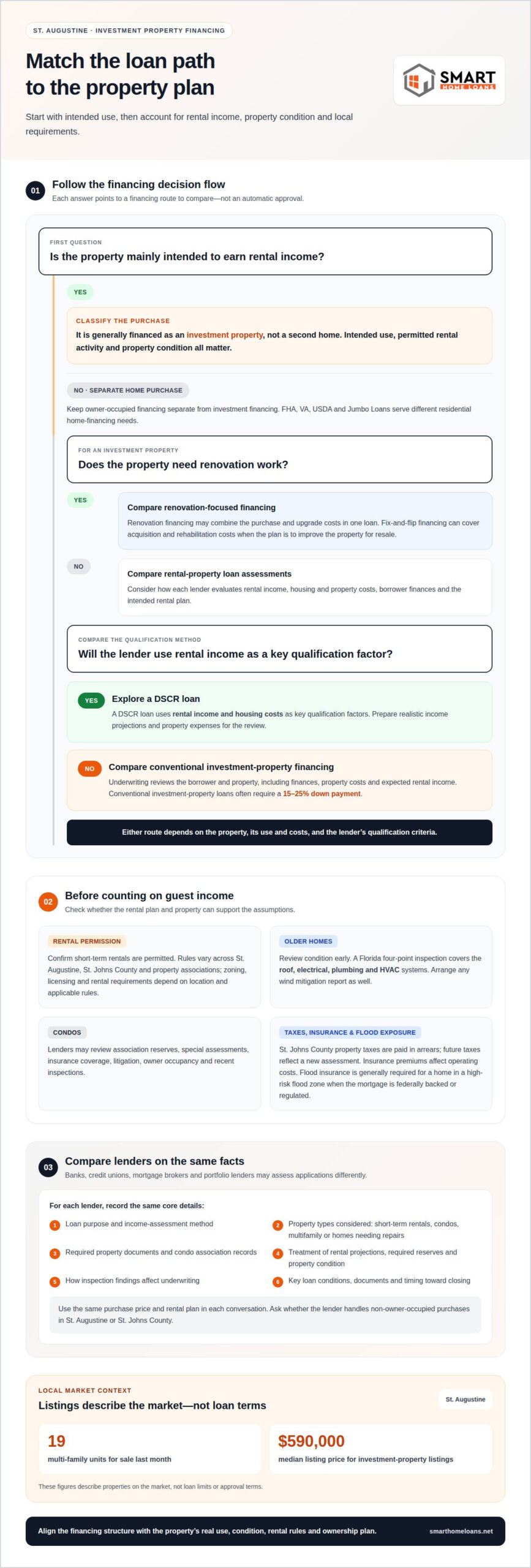
Underwriting reviews both the borrower and the property. Lenders assess finances, property costs, and expected rental income. Conventional investment-property loans often require a 15-25% down payment. A DSCR loan uses rental income and housing costs as key qualification factors. Prepare realistic income projections and property expenses so the financing review reflects the rental plan.
Investment Financing Options
Compare conventional investment-property financing with programs that consider expected rental income. The right option depends on the property, its costs, and the lender’s qualification criteria. Before relying on short-term bookings, confirm that rentals are permitted. Rules vary across St. Augustine, St. Johns County, and property associations. Zoning, licensing, and rental requirements depend on the property’s location and applicable rules.
Older homes need a careful condition review. A Florida four-point inspection covers the roof, electrical, plumbing, and HVAC systems. Arrange it early, along with any wind mitigation report. For condos, lenders may review association reserves, special assessments, insurance coverage, litigation, owner occupancy, and recent inspections.
St. Johns County property taxes are paid in arrears, and future taxes reflect a new assessment. Insurance premiums also affect operating costs. For a home in a high-risk flood zone, flood insurance is generally required when the mortgage is federally backed or regulated. Include rental restrictions, inspection findings, association issues, and flood exposure in your property and financing review before relying on projected rental income.
Availability of investment property loans in Florida
Florida buyers can compare conventional investment-property financing with programs focused on rental income. A DSCR loan evaluates rental income alongside housing costs. Availability and qualification depend on the property, its use, and the borrower’s finances. Compare these factors before settling on a purchase strategy.
Renovation financing may be another option when a property needs work, combining purchase and upgrade costs in one loan. Fix-and-flip financing can cover acquisition and rehabilitation costs. These options suit different plans, such as long-term rental ownership, short-term rentals, or resale after improvements. Match the financing structure to the property’s condition and intended use.
Local inventory gives useful context, but it does not measure loan availability. St. Augustine had 19 multi-family units for sale last month, and investment-property listings had a median listing price of $590,000. Those figures describe properties on the market, not loan limits or approval terms. Whether you are evaluating listings independently or working with Florida Commercial Investment Properties to acquire assets across the state, build your budget around the specific purchase and its planned improvements.
Use a simple comparison process. First, define whether the property will be a term rental, short-term rental, or renovation project. Next, compare how each loan type assesses income, property costs, and the work involved. Finally, consider how the proposed loan fits your cash flow and ownership plan. A mortgage for an investment property in St. Augustine should align with the property’s real use, not just its listing description. If you’re also weighing a separate home purchase, review mortgage options for that goal.
Which lenders offer investment property loans in St. Augustine or St. Johns County?
Compare lender types, not just advertised rates. Banks, credit unions, mortgage brokers, and portfolio lenders may evaluate investment-property applications differently. Ask whether the lender handles non-owner-occupied purchases in St. Augustine or St. Johns County. Then clarify how it assesses the property, your finances, and your intended rental plan.
Ask each lender the same questions: Does it consider short-term rental income? Does it finance condos, multifamily buildings, or properties needing repairs? Which property documents does it need to review? Clear answers help you judge whether its process fits your purchase.
Compare the proposed loan structure, not just the lender category. Review how the lender treats rental projections, required reserves, property condition, and condo association records. For an older home, ask how inspection findings affect underwriting. The lender’s process can shape the documents, timing, and conditions needed to move toward closing.
Keep a simple comparison sheet for each lender. Record the loan purpose, income-assessment method, property types considered, required documents, and key conditions. Use the same assumptions in each conversation, including the purchase price and rental plan. This makes differences easier to spot without relying on broad claims about availability.
For St. Augustine borrowers, a local mortgage discussion can connect the property plan with suitable financing paths. Discuss your mortgage options and bring the property type, intended use, and projected rental income to the conversation.
Compare banks, credit unions, mortgage brokers, and portfolio lenders. Ask whether they handle non-owner-occupied purchases in St. Augustine or St. Johns County.
Smart Home Loans: FHA Home Loans
Smart Home Loans can help you review residential financing options alongside your St. Augustine purchase plans. FHA, VA, USDA, and Jumbo Loans serve different home-financing needs. These options may be relevant if you’re also planning a separate residential purchase or comparing financing for another property.
Bring the property address, intended use, and rental plan to the conversation. These details help clarify the financing questions, especially when an investment property and a personal home purchase have different purposes. You can also discuss which residential loan option fits your separate home-buying goal.
For a conversation about your financing needs, contact Smart Home Loans.
Make your next financing decision with clarity
Before moving forward, define what success means for this purchase. Is your priority steady rental income, flexibility for personal use, or preparing a property for improvements? A mortgage for an investment property in St. Augustine should fit the role you expect the property to play, not just the opportunity that first caught your attention.
Bring that goal, the property details, and your financing questions into one conversation. Smart Home Loans can help you discuss the options that fit your broader home-financing plans. If you’re ready to take that next step, contact Smart Home Loans. A clear plan can make the next decision feel much more manageable.
Frequently Asked Questions
Do I need to be under contract, or can you review a property I am only considering?
You can assess a potential purchase before signing a contract. Gather the property address, type, intended rental use, condition, and expected income for an initial financing discussion. After you have a signed agreement, the lender can review the contract terms alongside your full application and property documents. Planning early helps you understand the financing needs before committing.
How early should I talk to a lender?
Talk with a lender while setting your budget, before making an offer. This gives you time to organize income, debt, and asset records and understand which financing paths suit your plan. If you’re considering a condo, include association documents in your planning. Early preparation can surface financing questions before contract deadlines arrive.
What is the minimum down payment for investment property loans?
There is no universal minimum for every investment-property loan. The required contribution depends on the loan structure, property classification, borrower finances, and underwriting criteria. Compare the down payment with reserve requirements and funds needed for closing or repairs. These additional cash needs can affect how much money you should keep available after the purchase.
What Are the Best Loan Options for First-Time Investors?
The best fit depends on your investment plan and the income you can document. Compare financing based on your qualifications with options that consider projected property income. If the property needs work, consider how renovation financing fits your budget and timeline. Before choosing, map expected rental income against ownership costs and decide whether you plan to hold or resell.
What down payment is required for a rental property mortgage in St. Augustine?
For a St. Augustine rental, the required down payment follows the investment-property loan terms, not assumptions based on an owner-occupied purchase. The loan type, property condition, borrower qualifications, and underwriting determine the amount. Ask how required reserves and repair needs affect your cash plan, then compare those requirements with the funds you can commit.