

Financing a condo in Saint Augustine starts with two reviews: your finances and the condo association’s building and records. Typical warrantability criteria include at least 51% of units being owner-occupied, alongside limits on investor ownership, unpaid association dues, and commercial space. Special assessments and payment terms can also affect affordability and loan eligibility.
It’s sensible to talk with a lender before you make an offer, so you can understand your borrowing options while you search. This guide explains how assessments and balloon-payment terms can shape the decision, then compares conventional, FHA, VA, USDA, jumbo, and renovation financing. You’ll also see what to discuss with Smart Home Loans early, so the condo’s financial picture and your loan path are part of the same plan.
Key Takeaways
- Review association finances and special assessments alongside your own budget, since both can affect condo loan eligibility.
- Understand how an amortization schedule differs from a balloon-payment deadline before agreeing to owner financing.
- Compare conventional, FHA, VA, USDA, jumbo, and renovation loan paths based on the property and your financing needs.
- Talk with a lender early to discuss your loan options before making an offer.
Special assessments and loan eligibility
Financing a condo in St. Augustine Beach means reviewing both your finances and the condo association. Assessments, building condition, and ongoing costs can affect loan eligibility and affordability.
Condo Project Approval
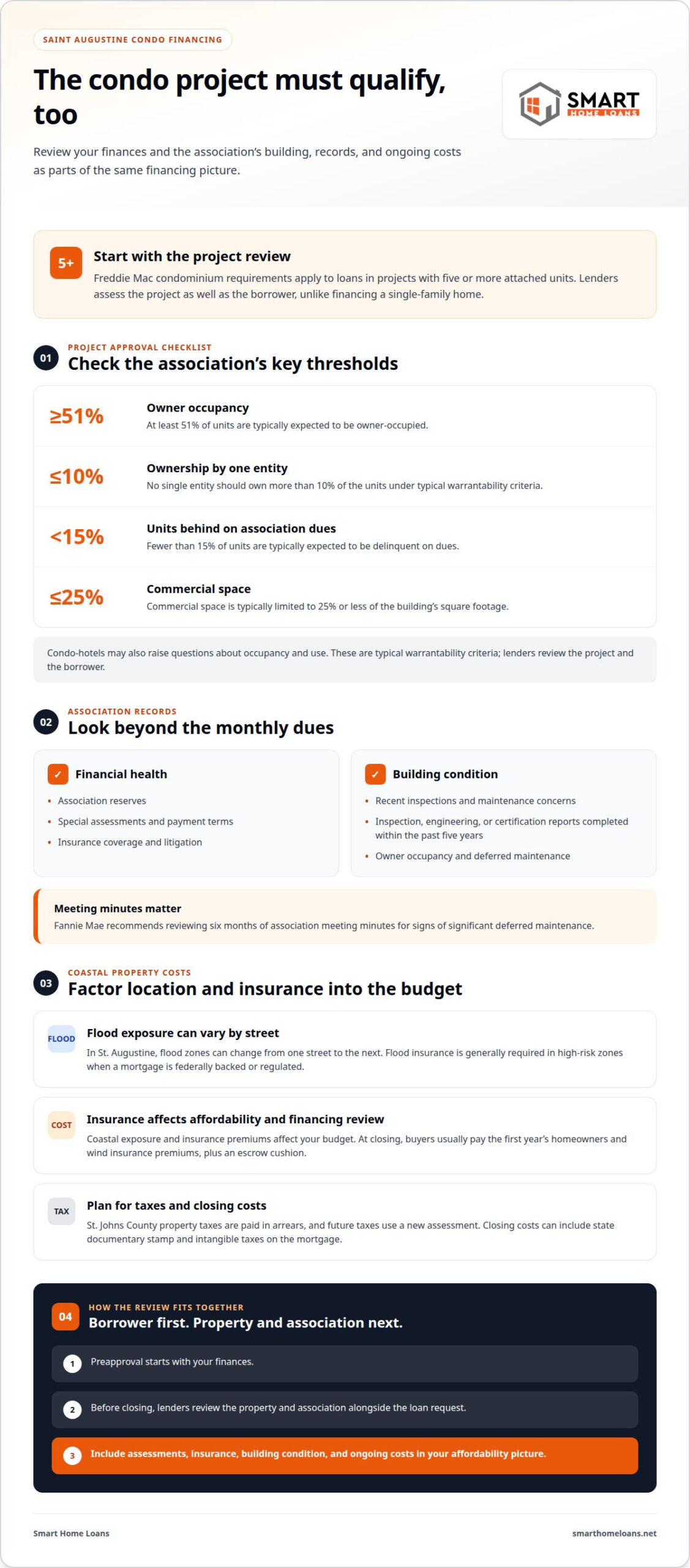
Freddie Mac condominium requirements apply to loans in projects with five or more attached units. Lenders assess the project as well as the borrower. Typical warrantability criteria include at least 51% owner occupancy, no single entity owning more than 10% of units, fewer than 15% of units behind on dues, and commercial space at or below 25% of building square footage. Financing a condo in St. Augustine Beach therefore involves project review, unlike financing a single-family home. Condo-hotels may also raise questions about occupancy and use.
Flood, Hurricane, and Insurance Factors
Flood zones can vary from one street to the next in St. Augustine. Flood insurance is generally required in high-risk zones when a mortgage is federally backed or regulated. Coastal exposure and insurance premiums affect your budget and the financing review. At closing, buyers usually pay the first year’s homeowners and wind insurance premiums, plus an escrow cushion. St. Johns County property taxes are paid in arrears, and future taxes use a new assessment. Closing costs can include state documentary stamp and intangible taxes on the mortgage.
Association Documents and Financial Risks
Review association reserves, special assessments, insurance coverage, litigation, owner occupancy, and recent inspections. Fannie Mae recommends reviewing six months of meeting minutes for significant deferred maintenance, plus inspection, engineering, or certification reports completed within the past five years. The listed average home value in Saint Augustine Beach is $591,834, not a condo-specific average. Preapproval starts with borrower finances; lenders then review the property and association before closing.
Amortization and balloon-payment terms
Distinguish the payment schedule from the date the full balance comes due. Amortization describes how scheduled payments repay a loan over time. A balloon payment is a larger remaining balance due on a specified date. These terms can create different budget demands, even within one financing agreement.
A St. Augustine example shows why both dates matter. The owner-financed home at 4705 Avenue B has payments amortized over 20 years, with a balloon payment due in 10 years. The seller must approve the owner-financing terms, and both parties must agree. This example concerns a home, not a general condo-loan term.
With this structure, the payment schedule uses a longer repayment period than the time before the balloon payment comes due. Plan for the final balance as well as the regular installments. Ask how the agreement defines payment amounts, the balloon deadline, and the remaining balance at that point. Rental plans need separate attention: in St. Johns County, a property bought mainly for rental income is usually financed as an investment property, often with a larger down payment and different requirements than a second home.
- A second home is generally used by its owner for part of the year, not operated as a full-time rental.
- Short-term rental rules vary by city, county, and association in St. Augustine.
- Rental income should not anchor your budget until you know the property’s permitted use.
Map the payment timeline against your intended use and available funds. If upfront cash is a concern, down payment assistance may be relevant to your purchase planning. A lender can help you understand how the loan structure and property use fit together before you commit to terms.
Conventional, FHA, VA, USDA, jumbo, and renovation loan options
Your loan choice depends on eligibility, intended use, property condition, and the amount you need to finance. Compare these factors before focusing on a rate or monthly payment.
Conventional Loan Options
Conventional mortgages can finance primary homes, second homes, and investment properties. A smaller down payment usually means private mortgage insurance, which adds a monthly cost. Compare the amount you need with the applicable loan limit, then include mortgage insurance when estimating affordability. Condo project eligibility matters alongside your qualifications.
Government-Backed Loan Options
FHA loans may suit buyers with smaller down payments or those rebuilding credit, but the condo must meet FHA property standards. VA financing is another option if you qualify. USDA eligibility depends on the property address in St. Johns County, and eligibility maps can change. Check the address against the current map when choosing a loan path rather than assuming every coastal property qualifies.
Jumbo loans may be relevant when the financing you need exceeds conforming limits. Compare the amount required with available loan terms and the property’s eligibility. If a condo needs repairs, renovation financing may be worth considering separately. The work involved and the property’s condition can affect the options. These loan types are not interchangeable, so match the financing to the purchase, unit, and your qualifications.
Start with your intended use, approximate borrowing need, and the condo’s condition. Then discuss jumbo loan options as part of comparing financing paths for your purchase.
Smart Home Loans
Smart Home Loans can help you consider which financing path fits your condo purchase. If you’re weighing FHA Home Loans, VA Loans, USDA Loans, or Jumbo Loans, start with your intended use, the property address, and the amount you plan to finance. These details help frame a discussion about suitable options and condo eligibility. Bring questions about association reviews, payment structure, and whether the property will be your primary home, second home, or investment property. Considering these factors together can make the next steps clearer. To discuss your financing options, contact Smart Home Loans.
Take the Next Step Toward Your Condo Purchase
Move from condo search to financing plan by bringing your intended use, target property, and questions to a lender. That conversation can help you understand which loan paths may fit your situation and what information could shape the next steps. Financing a condo in St. Augustine Beach is easier to approach when your property choice and financing plan move forward together.
Smart Home Loans offers FHA Home Loans, VA Loans, and USDA Loans. Discuss these options alongside your condo plans and the financing details that matter to you. For a direct conversation about your next step, contact Smart Home Loans. A thoughtful plan can help you move toward your purchase with greater clarity and confidence.
Frequently Asked Questions
How early should I talk to a lender?
Talk with a lender before making an offer, ideally while narrowing your search. Early preapproval helps establish a purchase budget and gives you a chance to discuss your income, debts, available funds, and likely loan path. For a St. Augustine condo, raise the association review early too. Project concerns discovered after you choose a unit can disrupt your purchase timeline.
What are current mortgage rates and loan options for buying a condo in Florida?
Florida condo mortgage rates are not one fixed figure, and condo rates are slightly higher than single-family rates. Your quote depends on loan type, credit profile, down payment, loan amount, occupancy, and project eligibility. Options include conventional, FHA, VA, USDA, and jumbo financing. Compare the rate with the monthly payment, since the loan term and mortgage insurance can affect what you pay each month.
What down payment and credit score are typically required for a condo mortgage?
Down payment and credit score requirements depend on the loan program and your financial profile. There is no single threshold for every condo buyer. FHA loans may help buyers with smaller down payments or those rebuilding credit, while conventional financing with a smaller down payment usually requires private mortgage insurance. Occupancy, debts, available funds, and condo project eligibility also shape your financing options.
Can you finance a St. Augustine Beach condo with an FHA, VA, or conventional loan?
Yes. FHA, VA, and conventional financing can be options when borrower and property requirements align. FHA financing requires the unit to meet FHA property standards, and the condo project also undergoes review. Conventional financing considers your qualifications and project eligibility. With VA financing, borrower eligibility and the condo’s project status matter too. Approval involves more than the unit alone.